
From R&D Collaboration to the D‑oris System
 #Embevity, #Dimeq, #Embedded, #Collaboration
Introduction:
Cooperation with Dimeq on Maritime Safety Systems
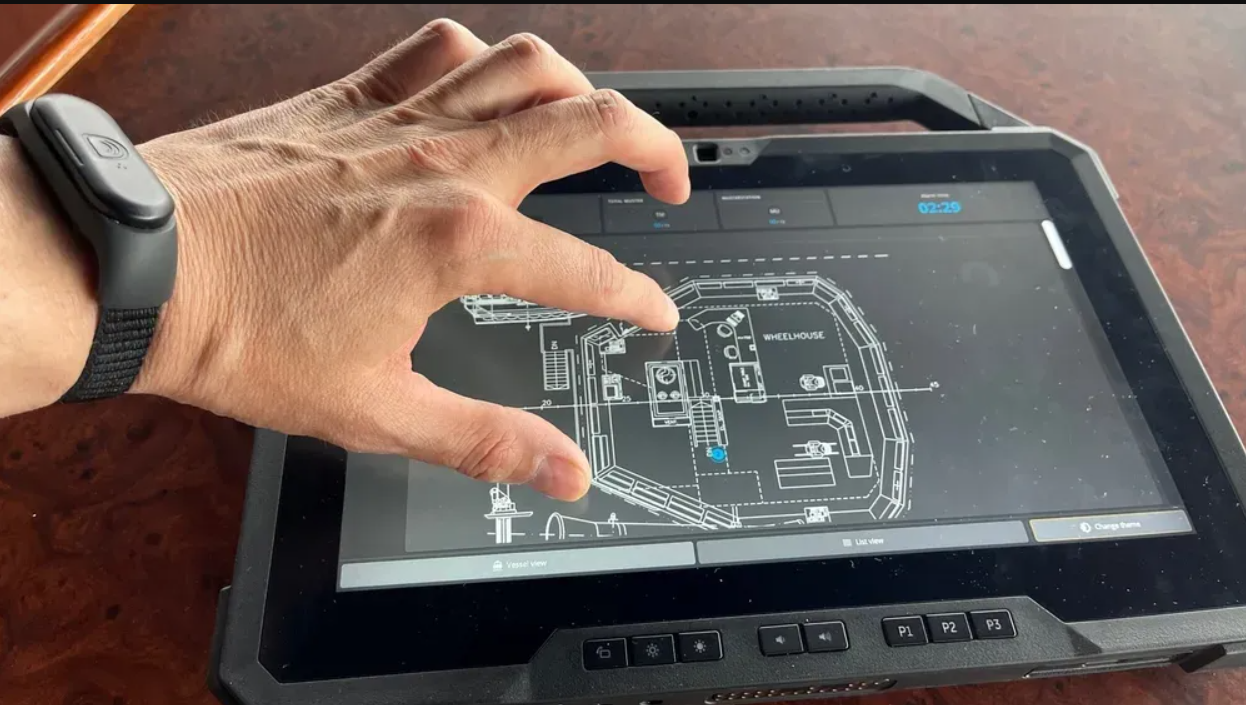
You may have already heard about our cooperation with Dimeq AS on their maritime safety system for real-time human positioning. That was a very challenging project we worked on in the early days of our company, where new technology combined with our team’s experience allowed the client’s idea to be turned into a product.
Some time has passed since then, resulting in multiple successful system installations in maritime environments. For us, it is very rewarding to know that we have actively contributed to the safety of sailors across the world.
However, the story to be told here is about our latest collaboration with Dimeq, which has just recently been demonstrated and tested in real‑life conditions. You can see it yourself in the following recording:

By: Krzysztof Bartnicki, Senior Developer

From EyeD to D‑oris: New Challenges for Small Vessels
While the EyeD system allows monitoring people on medium and large vessels in case of sea accidents, it does not scale down particularly well when small‑class boats are considered.
This represents a different class of challenges because:
- a small boat, such as those used for fishing, is operated by a very small crew, often a single person,
- real‑time positioning is no longer crucial, as the crew should be within each other’s line of sight most of the time, but…
- …it is still extremely important to identify potentially dangerous situations and respond properly within a short time.
Identifying Situations Requiring a Safety Response
These dangerous situations may include, for example:
- a man‑over‑board (MOB) incident,
- health‑related emergencies caused by internal or external factors,
- general incidents that may prevent normal vessel operation, such as a person becoming trapped somewhere on the boat and unable to control it.
In such cases, external assistance is required, which means that response time becomes a critical factor.
Therefore, the system must:
- reliably identify dangerous situations,
- raise an alarm and stop the vessel’s engine (especially during a MOB event),
- notify the appropriate rescue services.
Having clearly defined the challenges together with our client, we spent almost a year researching, implementing, and testing the best possible solutions.
Let’s look at these in more detail, along with some technical insights.
1. How a Maritime Safety System identifies dangerous situations
To start with, let’s describe the key components of the system.
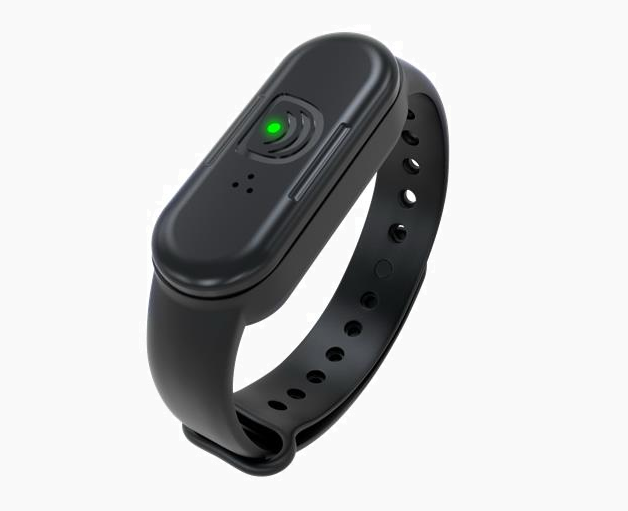
First, each crew member must wear a smart wristband, which serves as a personal protective device. The wristband periodically transmits “heartbeat” beacon signals over a radio interface to confirm the wearer’s presence on the boat. It can also detect a MOB event and allows the user to manually raise a distress signal.
The wristband design comes directly from the earlier EyeD project – both the hardware and firmware proved to be universal enough for the new environment. As a result, this significantly reduced development time and cost.
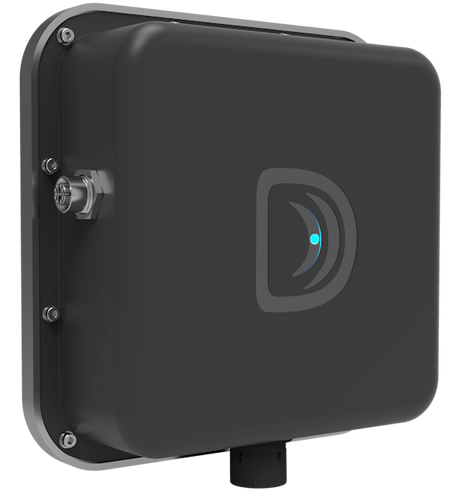
At the other end of the maritime safety system is a new device we call the Control Unit (CU). As the heart of the D‑oris system, it actively monitors all registered wristbands and reacts immediately to emergency situations such as:
- missing wristbands – or more precisely, missing “heartbeat” signals,
- wristbands broadcasting distress alerts,
- wristbands broadcasting MOB alerts.
2. Raising alarms on small vessels
When the CU detects an emergency event, the response follows a defined sequence immediately:
- it starts a configurable alarm‑activation countdown, triggering internal and external sound and light indicators,
- once the countdown expires, the system enters the full alarm state,
- the CU stops the vessel’s engine and activates the integrated VHF radio module to initiate help calls.
The crew can cancel the alarm at any stage if they are able to resolve the situation on their own.
3. Notifying rescue services – VHF, DSC, and AIS
In this area, the system must be fully compliant with existing marine standards, which required implementing a VHF radio capable of sending DSC calls.
Digital Selective Calling (DSC) is an automated distress and calling system used in marine radios and is part of the Global Maritime Distress and Safety System (GMDSS). DSC allows vessels to send digital, preformatted alerts – including distress signals with position, vessel identity (MMSI number), and the nature of distress—in a standardized data format.
The VHF radio uses the dedicated Channel 70 (156.525 MHz) exclusively for DSC transmissions. If a call does not reach the shore, nearby vessels can still pick it up, relay it, or organize rescue on their own.
Alarm scenario workflow
In practice, the alarm workflow looks as follows:
- the CU uses the VHF radio to broadcast a DSC call containing the vessel’s position and unique identification number,
- to ensure good signal coverage, the radio transmits at 25 W, which-depending on antenna placement-can reach almost 50 km (≈25 NM),
- in most cases, the call is received by a shore station, which sends an acknowledgment message and initiates a rescue action,
- if no acknowledgment is received, the radio periodically retransmits the distress call.
To further increase the chances of a successful rescue, accurate positioning is crucial. This is where Automatic Identification System (AIS) transponders come into play – and the CU is capable of generating fully compliant AIS beacon signals.
AIS operates on channels 87B and 88B (161.975 MHz and 162.025 MHz) and requires precise time synchronization to a UTC reference clock. Each minute, the AIS system allocates 2,250 communication slots, enabling vessels to continuously broadcast updated positions.
Engineering Challenges in a Maritime Safety System
From an engineering perspective, designing a fully functional VHF radio was the most challenging part of the project, from both hardware and firmware perspectives. We approached the final solution through several incremental iterations, gradually improving functionality and communication range.
The end result is comparable to products offered by well‑known radio vendors. Considering that our team initially had no experience in the VHF communication domain, this is a strong demonstration of the quality of our R&D services.
This project is also another successful example of our engineering based on Nordic Semiconductor’s nRF microcontroller family, built on top of the Zephyr RTOS. Reusing this proven hardware‑software stack ensures high quality and faster integration for new products.
Conclusion:
D‑oris as a proven Maritime Safety Solution
With the new D‑oris maritime safety system successfully tested in real maritime conditions, we’re proud to see our work evolve from concept to a robust safety solution for small‑vessel operators.
The collaboration with Dimeq once again showed how effective innovation becomes when ideas, engineering, and real‑world needs intersect. Seeing the system operate in real conditions reinforced our belief that high‑quality engineering can meaningfully contribute to safety at sea and help solve real problems people face every day.